Use Case Developer (Junior)
Role summary
You're the link between our internal product owners and our automation engine. Product owners bring you requirements; you understand them, translate them into use cases using our automation engine, and make sure the result is correct. When the AI gets the logic wrong, you fix it in code. Over time you also help develop the automation engine itself.
The role has two sides. One is human: working closely with product owners, asking the right questions, and understanding what they actually need. The other is technical: driving an AI automation engine, reviewing its output critically, and fixing logic by hand.
This is a junior role, and you won't be doing it alone. A team of senior developers stands behind you to support, teach, and review your work. We don't expect you to be excellent at any of this from day one — we expect you to learn, and we'll help you get there.
What you'll do
Work closely with internal product owners — receive requirements, ask clarifying questions, and make sure you understand the intent before building anything.
Translate requirements into use cases using our automation engine.
Review the engine's output critically: is the logic correct, complete, and aligned with what the platform does?
Fix use case logic by hand when the AI gets it wrong — reading and writing code, not just editing text.
Feed structured feedback back into the system so its output improves over time.
Contribute to the automation engine itself: improvements, new capabilities, bug fixes.
Must-have
Strong communication. You can talk to product owners, draw out real requirements, and turn vague asks into something precise.
Working knowledge of JavaScript and Python — you can read, write, and debug at a junior level.
Structured thinking: you break messy requirements into clear, testable use cases.
A critical eye for AI output — you don't take it at face value, and you're willing to dig into why something looks off.
Comfort using AI tools as a daily driver.
Nice-to-have
Understanding of how LLM-based systems behave (prompting patterns, failure modes).
Interest in the maritime / operational-data domain.
Git and ticketing tool experience (Jira, Linear, or similar).
How we'll evaluate fit
We're hiring for potential, not a finished skill set. We want to see how you think and learn.
Requirements: given a vague ask, can you find the right questions to make it clear?
Debugging: given some broken logic, can you reason your way toward the problem?
AI judgment: shown AI output, can you tell when something doesn't look right?
Communication: can a product owner trust that you understood what they meant?
Support and growth
You'll have senior developers around you from the start — to pair with, learn from, and lean on when you're stuck. You start by working with product owners and operating the engine with guidance. As you grow, you'll translate complex requirements independently and take on parts of the automation engine yourself. The goal is for you to grow into real ownership over time, with the team behind you the whole way.
Why Maranics
Most people spend years executing other people's decisions. At Maranics, you own the outcome. We are a small team building a tool that changes how businesses run in practice. Not prototypes, not internal tools that get quietly abandoned. When something ships here, you feel it.
Because we are small, your work is visible and the people who depend on it are not three teams away. We are genuinely AI-first, and we are building the kind of team that develops real judgment on real problems. Growth here is not rationed. When you are ready for more, you take it.
What We Are Looking For
You have 2–4 years of professional software development experience, solid .NET backend skills, and practical front-end experience. You are comfortable with Docker, Git-based workflows, and taking full ownership of a feature. A good grasp of software architecture fundamentals is important, as is strong written and spoken English.
Experience with CI/CD, infrastructure automation, or AI-assisted development tools is a plus. So is having worked in a small, distributed team before. You will know what that feels like.
Who This Is For
This role suits someone who wants more than ticket execution, who notices things, communicates openly, and cares about the outcome. If you want to build real things in a small remote team where your work has visible impact and your name is attached to it, this role will fit.
Practical Information
Location: Maranics is based in Gothenburg and the role works well hybrid, with flexibility on how often you are in the office. Work permit within EU is required. Start: As soon as possible, with consideration for your notice period.
About Maranics
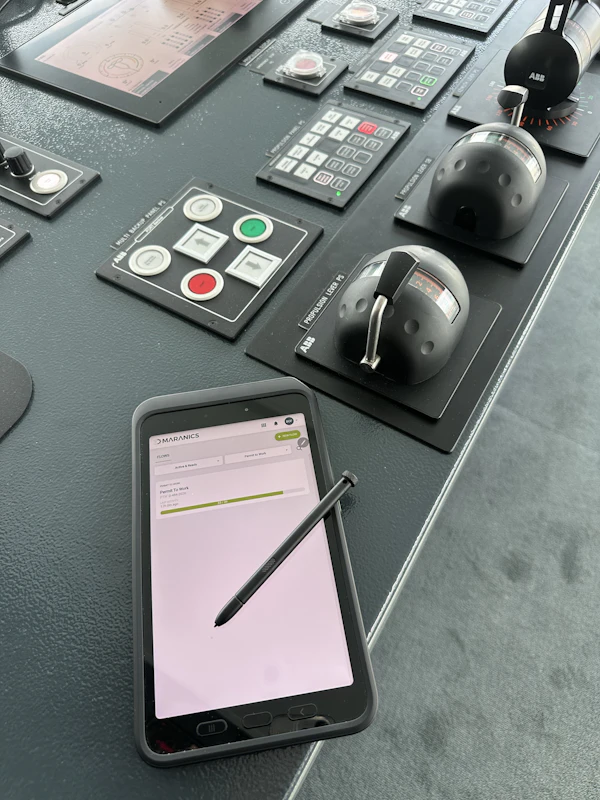
Maranics builds a platform that digitalizes operational workflows in complex, regulated industries. Where data was previously lost, scattered across silos, or trapped in manual processes, Maranics creates a single connected layer capturing what matters, routing it in real time, and delivering accurate, contextual data directly to the systems that need it.
Perks and benefits
This job comes with several perks and benefits

Near public transit

Pension plan

Paid holiday

Maternity / paternity leave

Remote work allowed

Free coffee / tea
Working at
Maranics AB